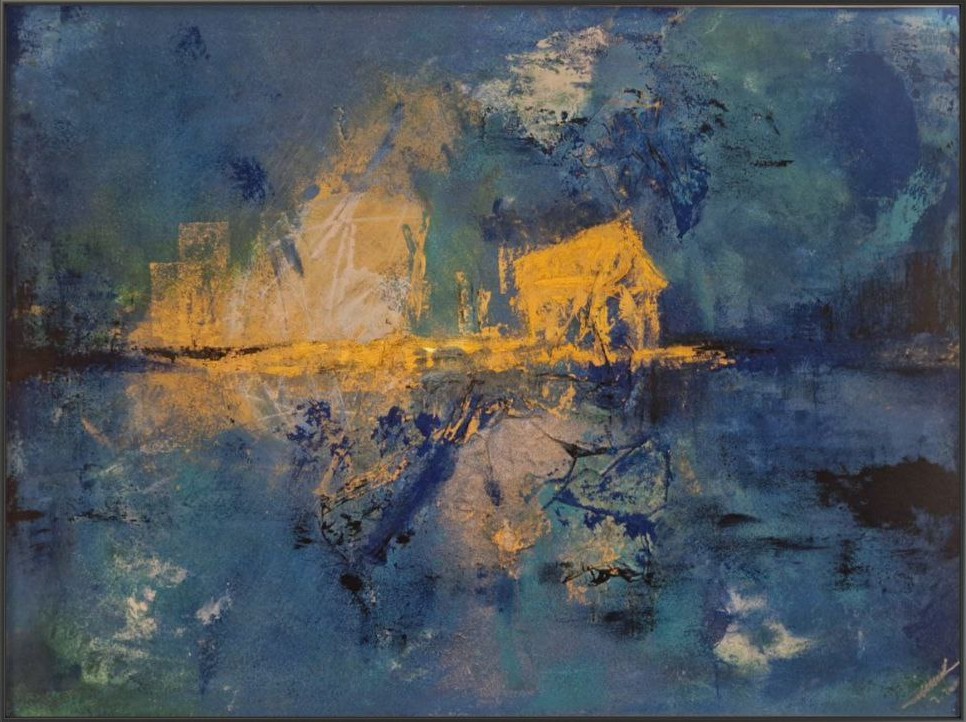
Es gibt kein Skizzenbuch. Keinen Plan. Keinen Moment, in dem ich vor einer leeren Leinwand sitze und weiß, was daraus werden soll.
Abstrakte Malerei beginnt für mich immer mit etwas Unsichtbarem — einer Stimmung, die sich nicht in Worte fassen lässt. Manchmal ist es die schwere Stille eines Morgens, manchmal ein Gefühl, das nach Tagen noch in mir nachhallt. Ich greife nicht zum Pinsel, weil ich etwas darstellen will. Ich greife zum Pinsel, weil ich etwas loswerden will.
Die ersten Minuten
Der Anfang ist immer der schwierigste Teil. Die Leinwand ist weiß und unbarmherzig. Ich beginne meistens mit einem großen Pinsel und einer Farbe, die sich in diesem Moment richtig anfühlt — nicht weil ich sie plane, sondern weil sie da ist. Manchmal ist es ein tiefes Dunkelblau. Manchmal ein warmes Ockergelb. Der erste Strich ist kein Kunstwerk. Er ist eine Geste.
„Ich male nicht, was ich sehe. Ich male, was ich fühle."
Schicht für Schicht
Acrylfarbe trocknet schnell — das ist ihr größter Vorteil und gleichzeitig ihre größte Herausforderung. Ich arbeite in Schichten. Die erste Schicht verschwindet fast vollständig unter der zweiten. Und die zweite unter der dritten. Manchmal kratze ich durch nasse Farbe hindurch und entdecke darunter etwas, das ich längst vergessen hatte. Diese Zufälle sind keine Fehler. Sie sind das Bild.
Der Entstehungsprozess eines einzigen Werkes kann Stunden dauern — oder Tage. Ich höre oft Musik dabei, ohne bewusst zuzuhören. Das Atelier verändert seinen Charakter je nach Tageszeit: morgens ist es ein Ort der Konzentration, nachmittags einer des Experiments, abends manchmal einer der Stille und Überprüfung.
Wann ist ein Bild fertig?
Das ist die Frage, die ich am schwersten beantworten kann. Ein Bild ist nicht fertig, wenn alle Flächen bedeckt sind. Es ist fertig, wenn es eine eigene Stimme hat — wenn es ohne mich existieren kann. Manchmal weiß ich das sofort. Manchmal hänge ich ein Bild an die Wand und schaue es tagelang an, bevor ich mich entscheide.
Was ich in all den Jahren gelernt habe: Kontrolle ist eine Illusion. Die besten Bilder entstehen in dem Moment, in dem ich aufgehört habe, das Ergebnis zu wollen.